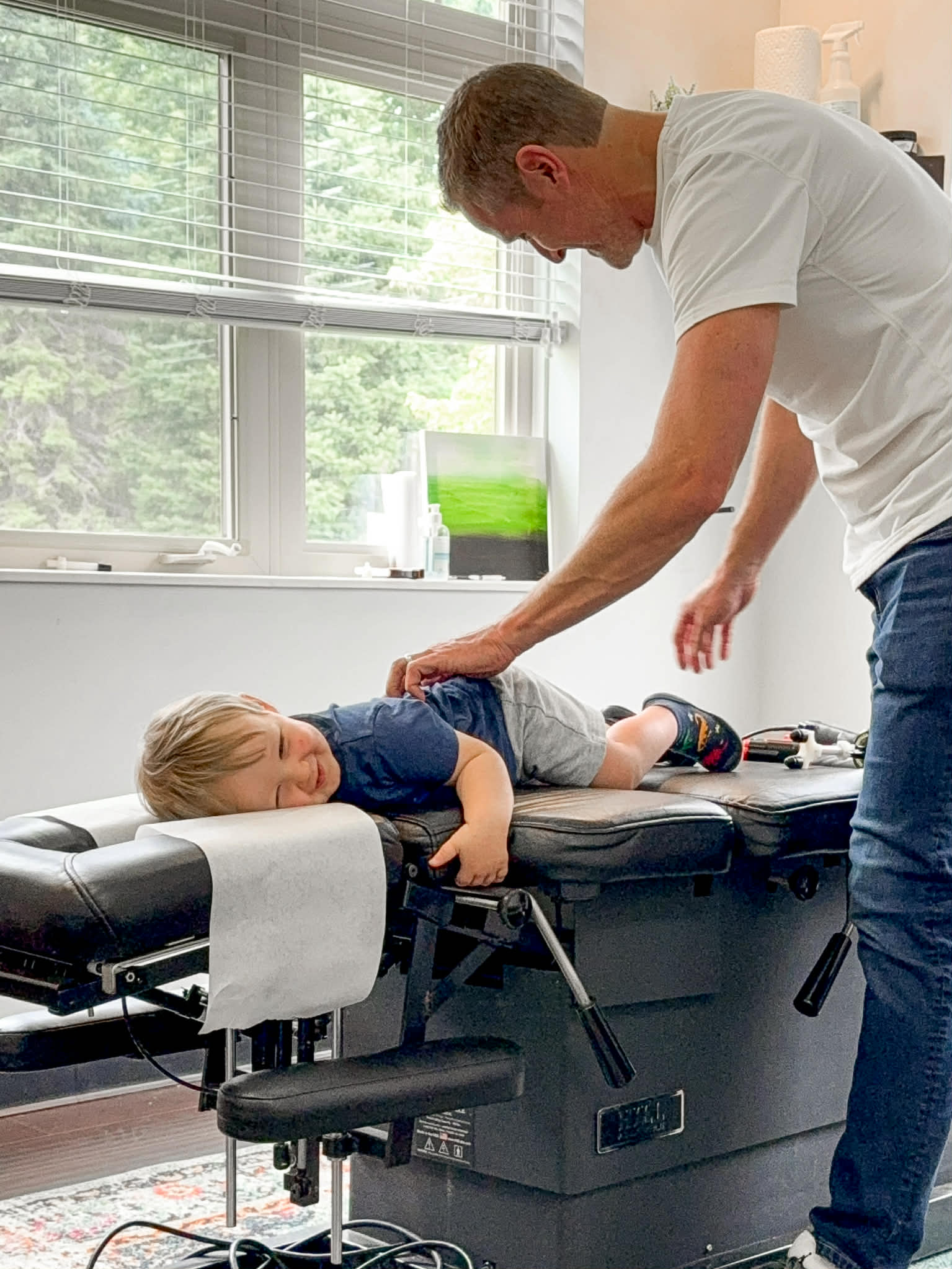

Infant Chiropractic Care for Sleep Problems and Colic in Columbus, Ohio
You’re exhausted, your baby is inconsolable, and every piece of advice you’ve been given hasn’t made a dent. If you’re a Columbus-area parent in the thick of infant colic or sleepless nights, you’re not alone, and you may not have considered that the nervous system could be playing a role. At Proactive Health & Wellness, we work with families navigating exactly this kind of exhaustion, bringing a neurologically-focused chiropractic approach to infant care that starts with understanding your baby’s whole picture.
What Is Infant Colic, and Why Is It So Hard to Solve?
Colic is typically defined as crying that lasts more than three hours a day, more than three days a week, for more than three weeks in an otherwise healthy infant. That clinical definition doesn’t come close to capturing what it actually feels like for the parents living through it. The crying is intense, the cause is often unclear, and conventional pediatric guidance frequently offers little beyond “wait it out.”
Estimates suggest colic affects somewhere between 10 and 40 percent of infants worldwide, typically appearing in the first few weeks of life and peaking around six weeks of age. Most cases resolve by three to four months, but for parents in the middle of it, that timeline can feel impossible. The frustration is compounded by the fact that there’s no universally agreed-upon cause; theories range from gastrointestinal immaturity and gas pain to nervous system dysregulation and sensory overstimulation.
That last category is where neurologically-focused chiropractic care enters the conversation. The birth process, even in uncomplicated deliveries, places significant physical stress on a newborn’s spine and nervous system. When that stress goes unaddressed, it can contribute to irritability, feeding difficulty, disrupted sleep, and the kind of persistent crying that gets labeled as colic.
The Nervous System Connection Parents Often Don’t Hear About
Most parents don’t think about their newborn’s nervous system until something goes wrong. But the nervous system is the master control system for everything: digestion, sleep cycles, stress regulation, and the ability to settle and self-soothe. When there’s tension or interference in the upper cervical spine (the area at the base of the skull and top of the neck), it can affect how signals travel between the brain and the body.
During delivery, the neck and upper spine are subject to considerable forces: pulling, twisting, or compression that can create what chiropractors call subluxation, or areas of reduced nerve function. This doesn’t mean something is broken or dramatically wrong. It means the nervous system may not be operating at its full capacity, and that can show up as a baby who cries constantly, won’t settle, sleeps in short unpredictable stretches, or arches away from feeding positions.
Neurologically-focused chiropractic care for infants is not about cracking or forceful adjustments. Infant chiropractic involves gentle, specific pressure, often compared to the pressure used to check a ripe tomato, applied to the spine and surrounding structures to reduce tension and support better nervous system communication. The goal is to give the baby’s body the best possible environment to regulate itself.
How Infant Chiropractic Care May Support Better Sleep
Sleep is regulated by the nervous system. When a baby’s nervous system is in a chronic state of stress or overdrive, settling into and staying in sleep becomes much harder. Parents of colicky babies often describe infants who seem exhausted but fight sleep, startle easily, or cycle through wake windows in unpredictable patterns.
Infant chiropractic care aims to reduce the neurological tension that can keep a baby’s system stuck in that elevated state. When the nervous system can shift more easily between arousal and calm, sleep often becomes more organized. Parents who bring their infants to Proactive Health & Wellness often report that one of the first changes they notice is not necessarily a dramatic shift in colic, but a baby who seems calmer, feeds more easily, and begins to settle into longer sleep stretches.
It is important to be clear: chiropractic care is not a guaranteed cure for infant sleep problems or colic. Sleep in infancy is complex and influenced by feeding, environment, developmental stage, and many other factors. What neurologically-focused chiropractic care offers is a drug-free way to address one potential contributing factor, nervous system tension from birth stress, that pediatric medicine often doesn’t evaluate.
What to Expect at a Newborn or Infant Chiropractic Visit Near You
If you’ve never brought an infant to a chiropractor, the first visit may look very different from what you’d expect. At Proactive Health & Wellness, the process begins before you ever walk through the door.
When you fill out the form on our contact page, one of our Care Advocates calls you right away, not just to schedule you and send you on your way, but to actually understand what your family is going through. They’ll ask about your baby’s birth story, the symptoms you’re seeing, what you’ve already tried, and what you’re hoping chiropractic care might offer. This conversation matters because colicky, sleep-disrupted infants often have stories that start at delivery, and those details shape how we approach care.
During the first visit, Dr. Reinhart will perform a thorough assessment of your infant’s spine, posture, and neurological function. This includes evaluating head movement and neck range of motion. Restricted head turning to one side is a common finding in infants with feeding and sleep challenges. Infants who consistently favor one side, have difficulty latching on one breast, or who seem to hold tension through the neck and shoulders are particularly good candidates for a chiropractic evaluation.
The adjustments themselves are incredibly gentle. For newborns and young infants, the pressure used is minimal, specific and intentional, but soft. Most infants tolerate the adjustments well, and many become noticeably calmer during or immediately after a session.
Infant Chiropractic and Latching: A Related Challenge Worth Mentioning
Sleep and feeding are deeply connected in infancy. A baby who struggles to latch efficiently doesn’t feed well. A baby who doesn’t feed well is hungrier, more frustrated, and harder to settle, which compounds sleep difficulty. This is why infant latching challenges and colic often travel together, and why addressing one sometimes improves both.
Restricted movement in the upper cervical spine can affect a baby’s ability to position their head correctly for breastfeeding, create jaw tension that interferes with an effective latch, and make certain feeding positions uncomfortable. When these restrictions are addressed through gentle chiropractic care, feeding often becomes easier, which means more complete feeds, less gas and discomfort, and better sleep. If your baby is struggling to latch as well as sleep, that combination is worth mentioning to our Care Advocate when they call.
Is Chiropractic Care Safe for Infants?
Safety is the first question every parent asks, and it is the right question. Infant chiropractic care, when performed by a trained practitioner with specific pediatric chiropractic experience, has a strong safety record. The techniques used for newborns and infants are fundamentally different from adult adjustments. There is no high-velocity manipulation, no twisting, and no popping or cracking sounds. The forces involved are gentle and controlled.
A 2011 systematic review published in the Journal of Manipulative and Physiological Therapeutics examined adverse events in pediatric chiropractic care and found that serious adverse events in children were rare and predominantly associated with cases where there was an underlying undiagnosed condition, not from the chiropractic treatment itself. Mild, temporary soreness or fussiness after an adjustment is occasionally reported by parents and typically resolves within 24 hours.
The key is working with a practitioner who specializes in pediatric care and understands the differences in infant anatomy and nervous system development. At Proactive Health & Wellness, neurologically-focused pediatric chiropractic is a core part of the practice, not an occasional add-on to a primarily adult caseload.
A Drug-Free Approach for Families Who Want More Options
One of the most consistent things we hear from parents who find Proactive Health & Wellness is that they were looking for a drug-free path forward. When a baby is colicky and sleep-deprived, there is real pressure to reach for something that might offer fast relief. But many parents are uncomfortable with the limited options conventional medicine offers for infant colic, most of which have limited evidence and some of which carry their own risks.
Neurologically-focused chiropractic care fits naturally into a family’s existing pediatric care plan. It does not replace your pediatrician, and it is not positioned against any other healthcare your infant is receiving. It adds a lens that most conventional care doesn’t include: evaluation and support of the nervous system as a potential contributor to your baby’s symptoms.
For families in Columbus, Gahanna, New Albany, Westerville, and the surrounding communities who are navigating infant colic, sleep challenges, and the exhaustion that comes with them, Proactive Health & Wellness offers that drug-free option with genuine pediatric chiropractic expertise.
Frequently Asked Questions
How do I know if my baby's sleep problems or colic might be related to their nervous system?
There is no single test that confirms a nervous system contribution to infant colic or sleep difficulty, but certain patterns are worth paying attention to. If your baby consistently turns their head to one side more easily, has difficulty latching on one breast, holds visible tension through the neck and shoulders, or startles extremely easily, these can be signs that the nervous system and upper cervical spine are worth evaluating. At Proactive Health & Wellness, our Care Advocates are trained to ask about these patterns during your first call, and Dr. Reinhart’s assessment will look specifically at how your baby’s spine and nervous system are functioning. A thorough evaluation is the starting point for any conversation about whether infant chiropractic care is appropriate for your baby.
At what age can a baby see a chiropractor for colic or sleep issues?
Infants can be assessed by a pediatric chiropractor from the first days of life. In fact, many parents bring their newborns in during the first one to two weeks after birth, particularly when birth involves interventions like forceps, vacuum extraction, or a long or difficult labor, all of which place additional stress on the infant’s spine and nervous system. There is no age floor for a chiropractic evaluation, provided the practitioner has specific training in newborn and infant care. At Proactive Health & Wellness, we see infants across all stages, from the first weeks of life through toddlerhood and beyond, as part of our neurologically-focused pediatric chiropractic practice.
How many chiropractic visits does an infant typically need for colic or sleep problems?
Every baby is different, and care recommendations at Proactive Health & Wellness are always individualized. Some parents report noticing changes after just one or two visits. Others find that their infant benefits from a short series of visits as the nervous system responds and adapts. During the initial assessment, Dr. Reinhart will discuss what he’s finding and what a reasonable care plan might look like for your specific baby. The Care Advocate model means you’ll have a real person to talk to throughout the process, not just instructions handed to you on the way out the door. The goal is always to support your baby’s nervous system with as much care as needed and as little as necessary.